 | | Hungry for Change?
Try these tips to engage in a more sustainable food system For all of us hungry for a Zero Waste lifestyle, the way our food is produced, consumed and disposed of plays an important role in the health of people and the planet. Globally, food and agriculture account for 26% of all greenhouse gas emissions, 50% of all land use, and 70% of freshwater use, according to a 2018 study. Unless we make changes, the environmental impacts of food systems could increase by up to 90%. Sustainable food systems comprise a variety of behaviors and relationships that promote diversity of plants and animals, contribute to thriving local economies, reduce damage and waste of natural resources, and provide a social benefit, such as fair employment and safe and healthy food. But participating in more sustainable food systems can be easier said than done! Sustainably grown foods are not accessible everywhere, can be packaged in unnecessary plastic or other materials, and can be more expensive — although this study showed that farmers’ market prices can be quite competitive compared to conventional grocery store prices. Contributing to sustainable food systems may not be easy, but every small action we take adds up! Read on to find out how you can reduce your food impact, no matter where you’re starting from. |
| |  | Since the middle of the last century, agriculture has been dominated by an industrial model that drives farmers to focus on producing only a few globally traded commodity crops at an ever-larger scale in a race to a least-cost approach, which can lead to long-term costs such as degradation to topsoil, and air and water pollution. More sustainable food production systems have been evolving, bolstered by such concepts as agroecology and regenerative farming (such as carbon farming). Many local farmers are implementing regenerative farming practices that build healthy soil! What you can do: - Check out Boulder County’s local farms! We’re lucky to have numerous wonderful local farms, many of which have farm stands and CSAs.
- Visit Boulder County Farmers Markets in Boulder, Longmont, and Lafayette, and Denver, which open starting in April or May (depending on location). Curbside pickup shopping is available year-round.
- Support companies with innovative food solutions, such as Boulder Food Rescue, which picks up and redistributes healthy produce; The Conscious Merchant, a Louisville (and Denver) zero-waste and refill store with careful, natural, and local sourcing; and Nude Foods Market, a grocery delivery company in Boulder that sources locally, uses reusable packaging, and will even deliver items by bike!
- Be a part of the Zero Foodprint Movement! Many farmers and ranchers want to convert to carbon farming, but it requires some investment to change the way they do business. That’s where Zero Foodprint comes in. At participating restaurants, a few cents from each meal is funding a Table-to-Farm Movement, helping farmers implement regenerative practices and build healthy soil. Find participating restaurants in Colorado!
|
|  | It can feel nearly impossible to find food without some unnecessary packaging that comes along with it. About 40% of plastic produced is for packaging, used just once and then discarded -- and so much food packaging is not widely recyclable, such as frozen food packaging and chip bags. Produce packaged in plastic may give consumers the perception that these fruits and veggies are cleaner, but some cling wrap contains phthalates, one of the most widespread endocrine disruptors. What you can do: - Avoid plastic packaging by shopping in bulk or at farmers’ markets, where plastic packaging isn’t the norm and you can generally bring your own bag.
- Try one of these recipes for food items that are commonly packaged in plastic.
- If you can’t avoid packaging, choose food packaged in recyclable packaging, such as cardboard (without a plastic coating), aluminum, and glass.
|
|  | Imagine this: You go to the grocery store and buy five bags of groceries. On your way out, you drop two bags on the ground...and keep walking. That’s what Americans do essentially every day — waste up to 40% of the food we buy. At the same time, one in seven Americans struggle to put enough food on the table. The average American family wastes about $2,220 per year on uneaten food! Along with wasted money are the embodied energy, water, and other resources used to grow that food and get it from the farm to the consumer. We can all take a bite out of food waste! What you can do: - Plan how much food you’ll actually eat using Save the Food’s Guest-imator tool.
- Buy “ugly” (but perfectly edible and delicious) produce at the store or at farmers' markets, ask for “seconds” — this less-than-perfect produce is often sold at a discount.
- Keep an “Eat me first” bin in your refrigerator for produce and other food that needs to be eaten soon.
- Donate food while it’s still good to your local food bank. In Boulder County, check out Boulder Food Rescue and Longmont Food Rescue, and Community Food Share.
After doing what you can to reduce food waste, remember to compost! It’s estimated that over 50% of a household’s waste are organics that, when sent to landfills, produce methane, a potent greenhouse gas! |
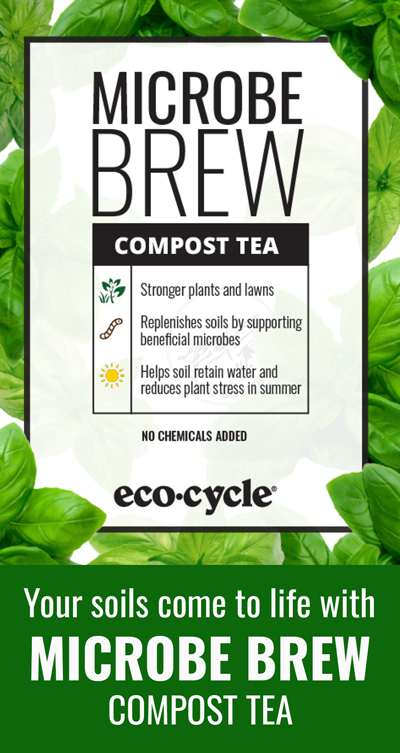
|  | MICROBE BREW COMPOST TEA IS COMING!
Available for pickup APRIL 3rd at the CHaRM, 6400 Arapahoe Rd, Boulder Local soils have low levels of microbial activity, which is the key difference between “soil” and just plain old dirt! Infuse your soils with Eco-Cycle’s Microbe Brew, for houseplants, lawns, gardens, flowers beds, trees and shrubs, to: * Promote stronger plants and lawns
* Replenish soils by supporting beneficial microbes
* Help soil retain water and reduce plant stress in summer heat Drive through the CHaRM to pick up Microbe Brew today! Available in 2 sizes: $25 for five gallons (covers all planted areas of a typical city lot); $6 per gallon (covers 200-400 square feet). Credit card payment only. |
|
|
| | Eco-Leaders 2.0 Training Series- Equity, Inclusion & Zero Waste: The Intersection Between Natural Resources and Social Justice
Thursday, April 8th & Thursday, April 22nd
5:30-7:30pm MDT, Via Zoom April is Earth Month, and to celebrate we invite you to our first two-part training about social justice and its intersection with Zero Waste. We will discuss the history of environmental justice and environmental racism, how those issues apply to natural resources and Zero Waste specifically, and how you can be a part of the solution. Parker McMullen-Bushman from Ecoinclusive will be our guest speaker. Please note that this is a two-part series, and ideally, everybody would attend both. However, if you can only attend one please let us know in the note section of the RSVP form and we will work it out with you! |
| |
|
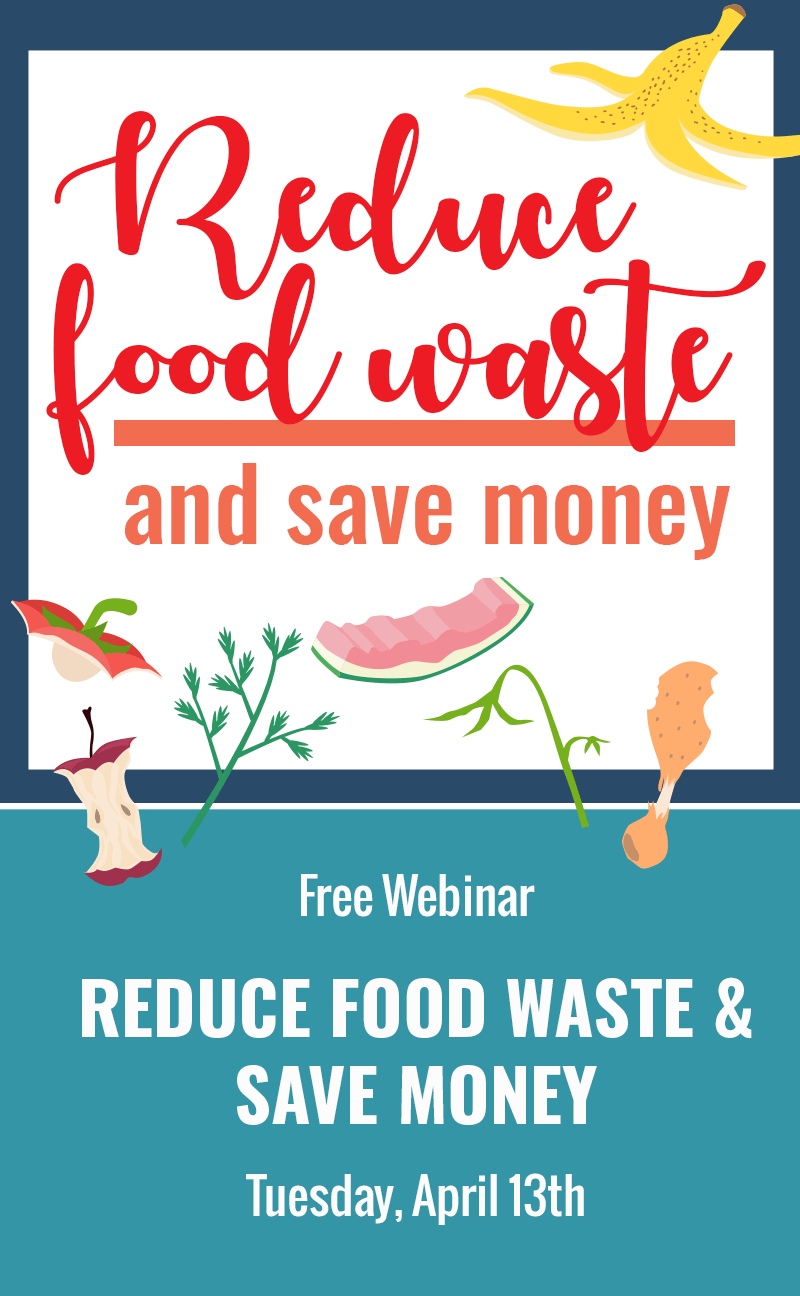
| | Reduce Food Waste and Save Money Webinar
Tuesday, April 13th
6:00-8:00pm MDT, Via Zoom Reducing food waste is one of the best ways we can conserve money, water, energy, and composting food scraps is a powerful climate solution! Join us for a webinar to learn strategies to save money, reduce food waste, and how to compost through Denver’s curbside compost services! |
| | |
|
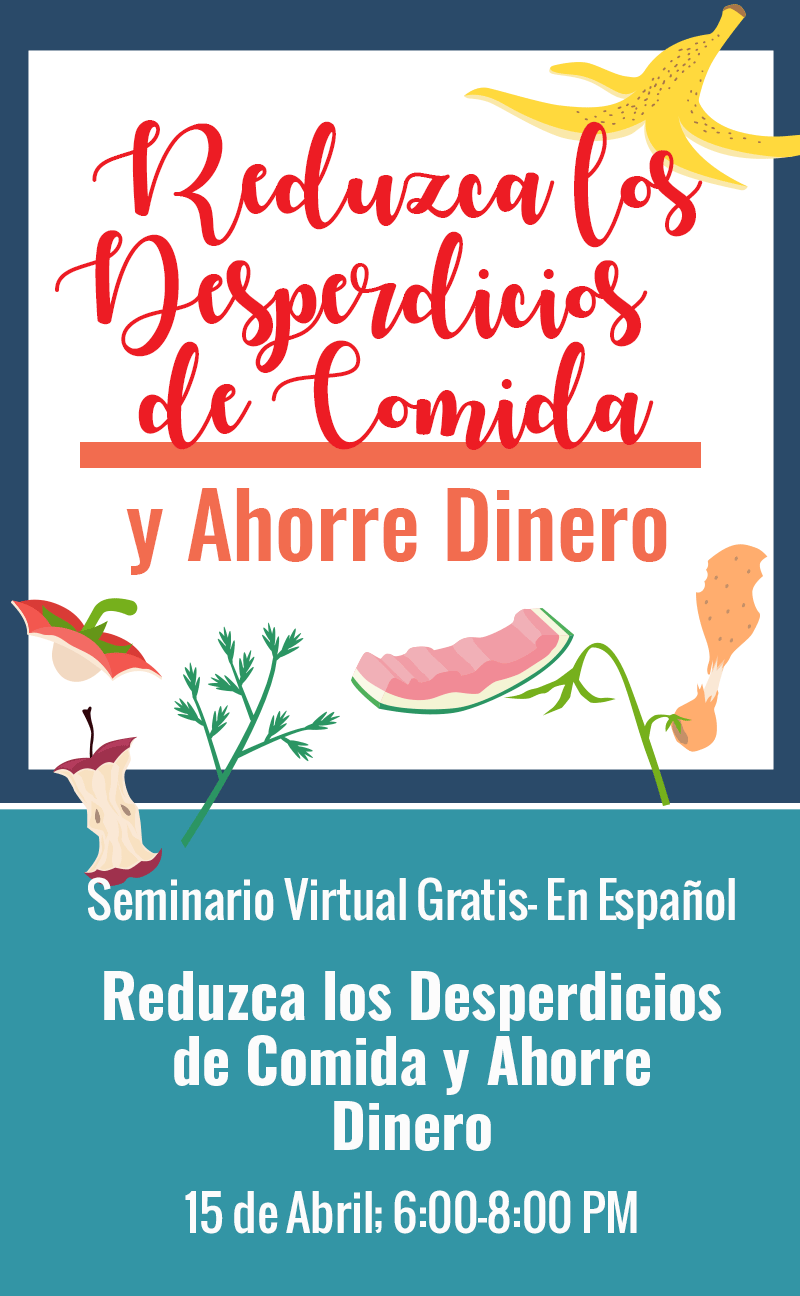
| | Reduzca los Desperdicios de Comida y Ahorre Dinero
Seminario Virtual Gratis- En Español
15 de Abril; 6:00-8:00 PM Reduciendo el desperdicio de comida es una de las mejores formas en que puedes ahorrar dinero, agua, energía y ¡compostando los residuos de comida es una poderosa solución climática! Únase a nosotros en un seminario web para aprender estrategias para ahorrar dinero, reducir desperdicios de comida y ¡cómo hacer abono a través de los servicios de compost de la ciudad de Denver! |
| |
|
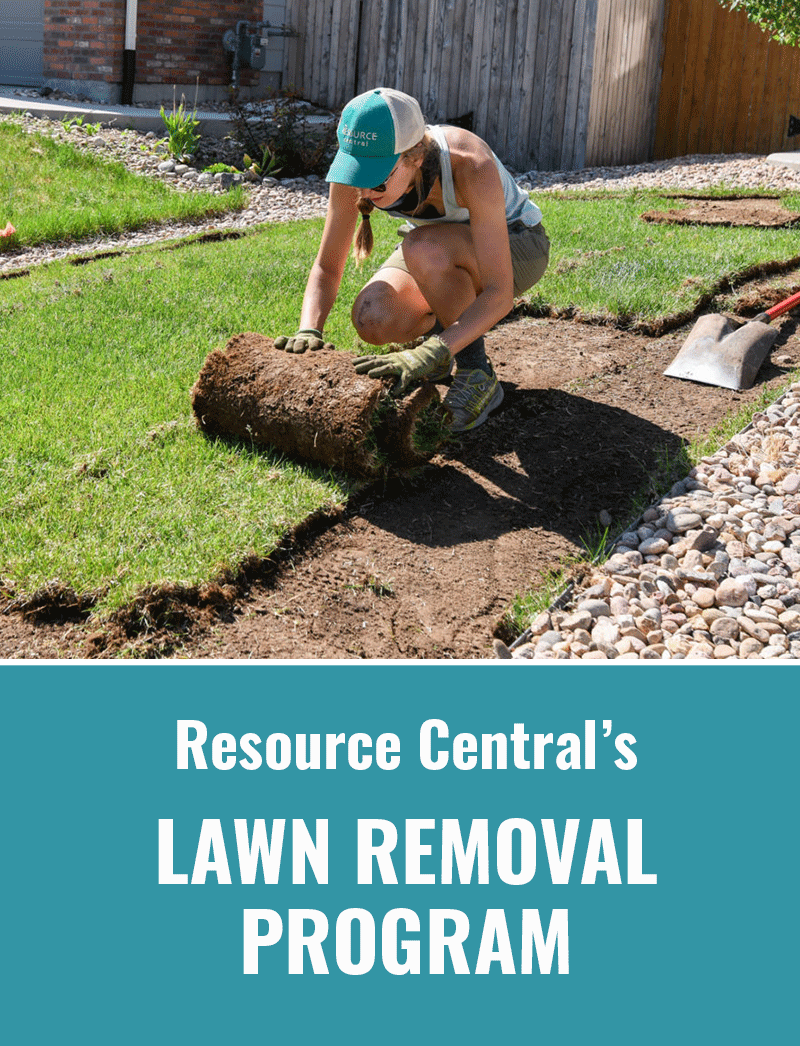
| | Lawn Removal Service Make space for a new low-water garden with Resource Central's Lawn Removal Service! They can help you ditch some of your lawn for just $2/sq. ft. Sign up today (you may be qualified for a discount!) |
| |
|
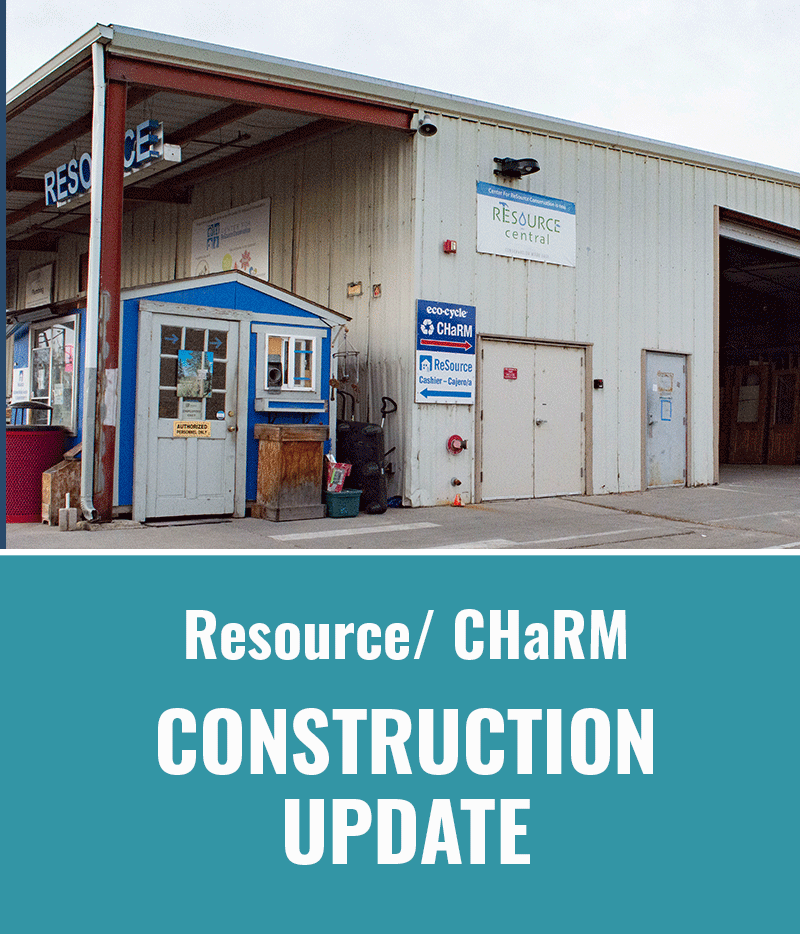
| | Construction continues at the CHaRM! Visitors to the CHaRM or Resource may be impacted by construction. The construction team will be working on utility work that requires a portion of Arapahoe Road to be closed. Please keep your eyes open for traffic signage! Resource Central, Eco-Cycle, & CHaRM are still open and operating as usual! Learn more about what's to come here. |
|
|
|
|
| | |
|
|